#1 Overall Winner
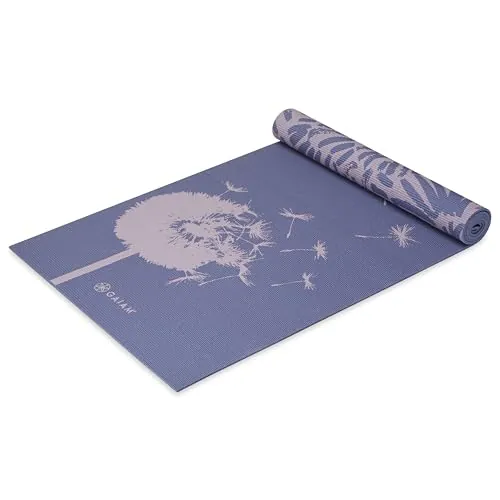
Gaiam Premium Print Reversible Extra Thick Yoga Mat
- Thicker 6 mm cushioning for yoga, Pilates, and floor-based exercise.
Comparison
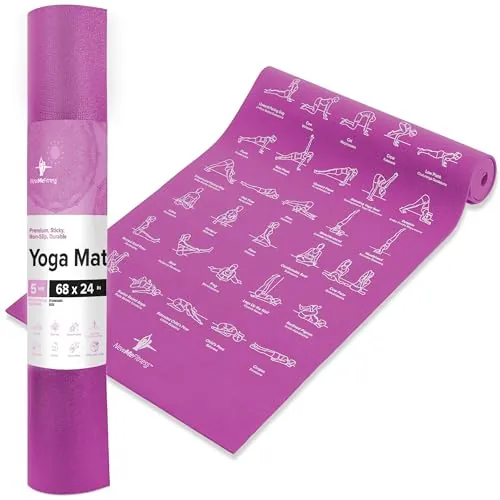
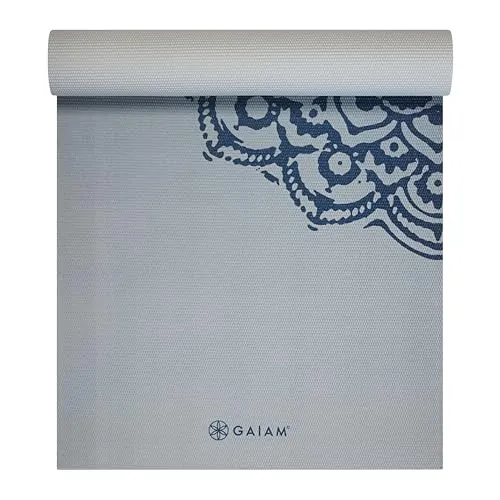
The Gaiam Premium Print Reversible Yoga Mat and NewMe Fitness Yoga Mat are PVC mats for yoga, Pilates, stretching, and general floor exercise. Gaiam emphasizes thicker cushioning and reversible styling at a lower listed price, while NewMe stands apart with 70 printed pose illustrations for self-guided practice.
#1 Overall Winner
Contender
Choose Gaiam for better all-round value, extra 6 mm cushioning, and a reversible mat for yoga, Pilates, and floor work. Choose NewMe if printed pose illustrations will make your home practice easier to follow. Neither is an unquestionable grip leader, especially for sweat-heavy sessions.
Overall winner
Depends on your needs
| Feature | Gaiam Premium Print Reversible Extra Thick Yoga Mat | NewMe Fitness Yoga Mat with 70 Printed Poses | Winner |
|---|---|---|---|
Listed price |
20.9 |
40.45 |
Gaiam Premium Print Reversible Extra Thick Yoga Mat |
Dimensions |
68 x 24 inches |
68 x 24 inches |
Tie |
Thickness |
6 mm |
5 mm |
Gaiam Premium Print Reversible Extra Thick Yoga Mat |
Material |
PVC; six specified phthalates excluded |
PVC; BPA-free and phthalate-free |
Tie |
Training guidance |
Downloadable yoga workout |
70 printed yoga poses |
Depends |
Surface design |
Reversible printed texture |
Printed pose illustrations |
Depends |
Comfort |
Frequently praised for cushioning |
Generally comfortable; thickness is mixed |
Gaiam Premium Print Reversible Extra Thick Yoga Mat |
Grip feedback |
Mixed; generally more favorable |
Mixed; sweat-related slipping reported |
Gaiam Premium Print Reversible Extra Thick Yoga Mat |
Durability feedback |
Mixed reports |
Positive long-term reports |
NewMe Fitness Yoga Mat with 70 Printed Poses |
New-mat odor |
Manufacturer notes possible strong odor |
Mixed buyer reports |
NewMe Fitness Yoga Mat with 70 Printed Poses |
Storage |
Rolls up; mat-bag storage recommended |
Rolls up compactly |
Tie |
Buyer feedback |
4.7 stars from 15,454 reviews |
4.7 stars from 9,044 reviews |
Gaiam Premium Print Reversible Extra Thick Yoga Mat |
Gaiam has the edge for gentle recovery routines because its additional thickness and favorable cushioning feedback make it a more comfortable base for floor stretching and relaxed mobility work. NewMe’s advantage is organizational rather than physical: the printed poses can help users choose stretches without a screen. Neither product should be viewed as evidence-based treatment for soreness or injury. Their practical role is to provide a cleaner, more comfortable exercise surface for low-intensity movement and cooldown routines.
Both mats support low-impact home training, including yoga, Pilates, stretching, warm-ups, abdominal work, and bodyweight exercise. Gaiam is the more general-purpose training surface because its extra thickness is more favorable for kneeling and supine work, while its reversible design does not steer the user toward one specific routine. NewMe is more structured: the printed pose illustrations can reduce the friction of starting a practice without a screen or instructor. For an experienced user who already knows their sequence, Gaiam is likely the more flexible choice; for a new practitioner, NewMe’s visual format can be more useful.
Neither product is a load-based strength-training tool, but both can provide a floor layer for bodyweight movements, mobility work, abdominal exercise, and stretching between sessions. Gaiam is the better option for these uses because its 6 mm profile and stronger cushioning feedback may be more comfortable for knees, wrists, and floor contact. NewMe can still support bodyweight work, especially where its pose guides are useful, but some buyers wanted more thickness on hard surfaces. Neither mat replaces a stable lifting platform for heavy resistance training.
Mobility and flexibility work are core uses for both mats. Gaiam offers the more cushioned base for prolonged kneeling, seated stretching, and Pilates-style floor positions, while its textured surface is intended to provide traction. NewMe’s printed poses are its meaningful advantage for users learning stretches or assembling a basic yoga flow without external guidance. Both have the same listed practice area, so neither creates more room for movement. Choose Gaiam for comfort-oriented flexibility work and NewMe for visual movement prompts.
Both mats can be used as a comfortable surface for gentle post-training stretching, breathing practice, and mobility routines. Gaiam is more favorable for recovery-oriented floor work because its extra thickness and stronger comfort feedback may reduce pressure from hard flooring during longer positions. NewMe is useful for users who want pose references while carrying out a simple cooldown sequence. These are exercise mats, not recovery devices, and the supplied information does not establish that either product delivers a specific recovery outcome.
For their primary role as exercise mats, both products appear capable of supporting yoga, Pilates, stretching, and general floor workouts. Gaiam has the performance edge through its 6 mm cushioning, textured reversible surface, and repeated praise for support and comfort. NewMe performs particularly well as a self-guided practice tool because the printed pose illustrations are immediately accessible. The main performance uncertainty for both is traction: some users find each mat adequately non-slip, while others report slipping, particularly under sweat. NewMe also receives mixed comments on whether its 5 mm thickness is sufficient on firm floors.
Training support is strong for both mats but takes different forms. Gaiam supports routine consistency with a versatile, cushioned surface that works across yoga, Pilates, core work, and general floor sessions; the included downloadable workout adds a starting resource. NewMe supports consistency by putting pose cues directly beneath the user, potentially making short independent sessions easier to begin. NewMe is therefore more intuitive for beginners building familiarity, while Gaiam is better for users who prioritize comfort across varied workouts. Neither product provides adjustable resistance, progressive loading, or a substitute for instruction on unfamiliar positions.
Gaiam is the more practical companion for bodyweight strength and floor-based accessory work because the listed 6 mm thickness provides more separation from a hard floor. It may be more comfortable for planks, core work, glute bridges, and kneeling exercises, though grip should be checked before dynamic movements. NewMe’s 5 mm surface can support the same light training roles and its illustrations may help with yoga-based movement patterns, but it has less padding and more mixed traction feedback. Neither mat is intended to secure heavy weights or replace a lifting surface.
Both mats are highly relevant to mobility, yoga, Pilates, and stretching. Gaiam is better where cushioning is central to the practice, including longer seated work and positions that load the knees or wrists. NewMe is better where pose recall is the limiting factor: its 70 printed illustrations give users a visual menu for independent sessions. Their identical listed dimensions provide equal movement space. Since grip feedback is mixed for both, users should be particularly attentive to traction during standing balances and sweat-heavy flows.
Gaiam has the edge for gentle recovery routines because its additional thickness and favorable cushioning feedback make it a more comfortable base for floor stretching and relaxed mobility work. NewMe’s advantage is organizational rather than physical: the printed poses can help users choose stretches without a screen. Neither product should be viewed as evidence-based treatment for soreness or injury. Their practical role is to provide a cleaner, more comfortable exercise surface for low-intensity movement and cooldown routines.
Both mats are intended to provide a more cushioned exercise surface, but neither removes the need to assess traction before practice. Gaiam lists a textured non-slip surface and specified phthalate exclusions, while NewMe lists BPA-free and phthalate-free PVC. Grip feedback is mixed for both, with NewMe receiving more reports of slipping when hands are sweaty. Gaiam’s manufacturer recommends airing the mat after unwrapping because of a potentially strong but described-as-harmless odor. NewMe’s pose images may aid recall, but users should learn unfamiliar positions from qualified instruction rather than relying only on printed diagrams.
Gaiam is the more comfort-focused mat. Its 6 mm thickness and widespread feedback about cushioning make it better suited to sensitive knees, wrists, and longer floor sessions. NewMe’s 5 mm profile is described by some buyers as a useful balance between padding and firm footing, but others find it less comfortable or wish it were thicker. Both can make yoga and stretching more comfortable than practicing directly on a hard floor. For users who regularly kneel, hold floor poses, or do Pilates, Gaiam is the safer comfort-led choice.
NewMe is easier to use for independent beginners because the pose illustrations are visible without opening a video or remembering a sequence. This can simplify short home sessions and help users select stretches at their own pace. Gaiam remains straightforward: it rolls up, includes a downloadable yoga workout, and can be spot-cleaned with a damp cloth and mild detergent. However, it requires airing before use when odor is present. NewMe’s care instruction is simply hand wash only, though its pose graphics may be a consideration for users concerned about surface wear.
Gaiam has the stronger stability case, supported by its textured surface, slightly thicker construction, and comparatively better traction feedback. Users often describe it as supportive for balance, although slipperiness is still reported by some. NewMe’s 5 mm thickness may offer firmer contact with the floor, but its grip reports are more inconsistent, especially when hands are sweaty. The printed pose surface does not guarantee secure footing. For either mat, standing balances and dynamic transitions should be approached cautiously if the surface or floor feels slick.
Gaiam is the better grip choice on the available information, but it is not a definitive non-slip solution. Its textured, sticky surface receives many positive traction comments alongside some reports of slipping. NewMe is also marketed as non-slip, yet buyers more frequently describe reduced traction when hands get sweaty. Washing or airing a new mat may improve the initial surface feel for some users, but that outcome is not guaranteed. Users practicing hot or sweat-heavy sessions should treat grip as a priority test before relying on either mat for demanding balances.
Both mats are space-efficient for ordinary home use because they share the same 68-by-24-inch listed footprint and roll up for storage. NewMe is slightly thinner at 5 mm and has positive feedback for rolling into a neat, compact bundle. Gaiam weighs 3.12 pounds and is also described as lightweight, with the manufacturer recommending storage in a mat bag when not in use. Neither is foldable or designed to stay permanently deployed, so the decision is not likely to hinge on storage space unless every small reduction in rolled size matters.
Both mats receive generally favorable quality feedback, but their designs prioritize different features. Gaiam uses a reversible printed PVC format with a textured sticky surface; customers often describe it as attractive, dense, and supportive. NewMe’s construction supports a printed instructional layout, and several reviewers describe it as sturdy or well made. NewMe has more favorable supplied long-term wear comments, whereas Gaiam has mixed durability feedback. Neither listing provides detailed information on surface-layer construction, so expected build quality should be assessed alongside the stated care requirements and intended frequency of use.
NewMe has the clearer durability advantage in the supplied evidence. One buyer reported using it three to four days a week for four years, and other comments describe it as durable. Gaiam also has positive quality reports, including a review describing sustained condition after regular use, but the aggregated feedback is more divided on durability. Gaiam’s care guidance warns that prolonged sun exposure may cause fading and brittleness, so storage matters. For either mat, durability will depend on cleaning, storage, floor conditions, and the intensity of use.
Gaiam provides the clearer care process: spot clean with its yoga mat wash or a damp cloth with cold water and mild detergent, dry flat, avoid prolonged sun exposure, and store in a mat bag. It also recommends airing the mat for two to three days after unwrapping if odor is present. NewMe lists hand washing only. The NewMe printed surface may warrant gentle care because at least one reviewer expressed concern that the print could fade over time. In either case, regular cleaning can help maintain the surface used for hands, feet, and floor exercise.
Both mats are practical for carrying between home and class because they roll up and have the same listed length and width. NewMe has a small portability edge because it is 5 mm thick and buyers describe it as rolling tightly, though no carrying strap or carrier is included in the supplied details. Gaiam is listed at 3.12 pounds and is described as lightweight despite its thicker profile. Users who commute to class should factor in a separate mat bag or strap, particularly for Gaiam, whose care guidance recommends bag storage.
Material disclosure is reasonably clear for both PVC mats. Gaiam identifies PVC as its material and states that it is free from DEHP, DBP, BBP, DINP, DIDP, and DNOP. NewMe identifies PVC and states that it is BPA-free and phthalate-free. Neither listing provides a more detailed breakdown of coatings, inks, or manufacturing processes in the supplied data. Gaiam gives more specificity about the named phthalates, while NewMe provides a broader phthalate-free statement. Buyers with particular material sensitivities should consider the noted new-product odor and consult the seller if further details are needed.
Gaiam provides better overall value from the supplied data. It has a much lower listed price while offering a 6 mm mat, reversible design, named phthalate exclusions, a downloadable workout, and a very large pool of highly favorable buyer feedback. Its initial odor and mixed traction and durability reports are meaningful compromises. NewMe costs more, but its 70 printed pose illustrations create value for beginners who would otherwise need a screen, guide, or prompt cards to structure practice. If those illustrations will not be used regularly, Gaiam offers the more compelling balance of comfort and cost.
Gaiam has the stronger brand-trust position in this comparison based on the supplied information. It has a larger review base, repeated positive experiences from returning buyers, clear care guidance, and specific disclosure of the phthalates excluded from its PVC mat. NewMe also has strong customer ratings and useful material disclosures, with several positive reports of lasting use. However, its lower review volume, limited care detail, and uncertainty about printed-surface wear leave more unanswered questions. Neither product includes provided third-party testing, certification, or warranty evidence.
Customer satisfaction is high for both mats, with each holding a listed 4.7-star rating. Gaiam has the larger review base and receives recurring praise for its attractive reversible design, cushioning, price, and support for knees and wrists. Its recurring negatives are odor, inconsistent grip, and mixed durability reports. NewMe is repeatedly praised for the usefulness of its printed poses, beginner appeal, comfort, and reported longevity. Its repeated concerns are a potentially slippery surface under sweat, limited padding for some users, and possible print wear. Both have substantial positive sentiment, but Gaiam has broader buyer validation.
The most supportable claims for Gaiam are its listed dimensions, 6 mm thickness, PVC material, reversible format, specified phthalate exclusions, and included downloadable workout. Customer feedback broadly supports its cushioning, though claims of dependable non-slip performance are less certain because grip reports conflict. For NewMe, the listed 70 printed poses, 5 mm thickness, PVC construction, BPA-free and phthalate-free statement, and dimensions are directly described. Reviews support its usefulness as a visual prompt, while claims around non-slip performance and cushioning should be treated cautiously due to mixed feedback. Neither listing establishes broader health or performance outcomes.
Gaiam wins this comparison as the more balanced choice for most yoga, Pilates, and home-workout users. Its main strengths are a thicker 6 mm cushioned surface, reversible design, clearly specified phthalate exclusions, large positive review base, and lower listed price. Its main limitations are the reported initial odor and inconsistent feedback on grip and durability.
NewMe is not a poor alternative; it is simply more specialized. Its printed pose library makes it particularly appealing for beginners and self-directed stretching or yoga sessions, and long-term durability feedback is encouraging. However, it is thinner, more expensive, and less dependable in traction feedback. Pick Gaiam for comfort and value, or NewMe for built-in practice guidance.

Overall winner
Depends on your needs
The Gaiam is the stronger all-round choice for buyers who want more cushioning, reversible styling, and a lower listed price. The NewMe is the more specialized option for beginners or independent practitioners who value having 70 pose illustrations in view. Both are suitable for yoga, Pilates, stretching, and floor exercise.
The NewMe Fitness mat is better suited to beginners who want visual reminders during a self-guided practice. Its printed pose illustrations can help users choose and recall positions, although they are not a replacement for instruction. Gaiam also supports beginners through its included downloadable workout, but its surface does not show poses.
The Gaiam mat is listed at 6 mm thick, compared with 5 mm for the NewMe mat. That small difference, together with buyer feedback, makes Gaiam the better option for people who prioritize cushioning for knees, wrists, and floor exercises. Individual comfort will still depend on the floor beneath the mat.
Yes. Both products are described for yoga, Pilates, stretching, and general floor workouts. Gaiam may be preferable where extra padding is important, while NewMe may be more useful for a simple self-led mobility or yoga sequence because the poses are printed on its surface.
Neither mat has flawless grip feedback. Gaiam has a textured, sticky surface and receives more favorable traction comments overall, but some buyers still report slipperiness. NewMe is also described as non-slip, though reviewers more frequently note that it can become slippery with sweaty hands. Cleaning and fully airing a new mat may affect initial feel.
The NewMe mat has an advantage for people who exercise without following a video or instructor because its printed poses are immediately visible. Gaiam is simpler and more versatile as a cushioned exercise surface, with a downloadable class included. Both have the same listed length and width and can roll up after use.
Gaiam specifically advises airing its printed mat for two to three days because a strong but described-as-harmless odor may be present after unwrapping. NewMe odor feedback is inconsistent: one buyer reported a persistent smell, while another reported none. Allowing ventilation before first use is a practical step for either mat.
Gaiam offers better value based on the lower listed price, extra 6 mm thickness, reversible design, included downloadable workout, and very large positive review base. NewMe costs more but adds a distinctive training aid: 70 printed pose illustrations. Its value is strongest when those on-mat visual prompts will be used regularly.
Check our rankings and expert guides to find the best fitness products for your goals.