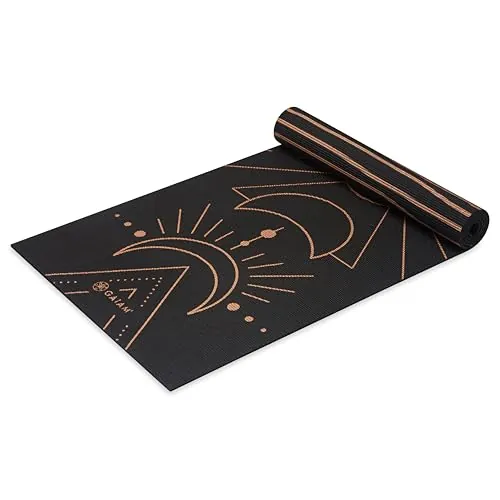
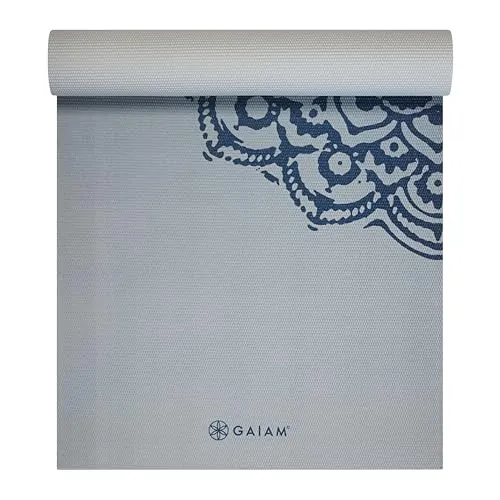
#1 Overall Winner
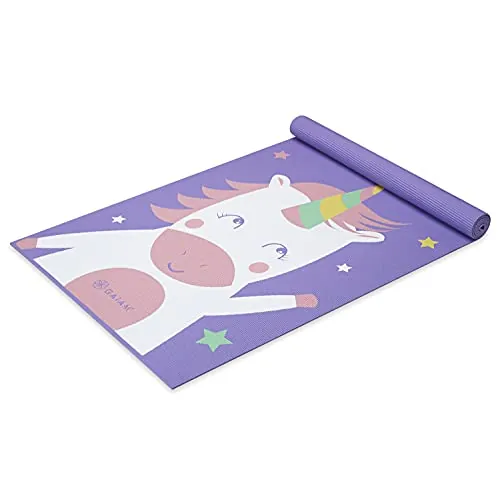
Gaiam Kids Yoga Mat Exercise Mat
- Child-sized 60-inch length is designed for children ages 5–8.
Comparison
The Gaiam Kids Yoga Mat is a lightweight, 3 mm mat designed for children ages 5–8, while the Gaiam Premium Print Reversible Yoga Mat is a longer, thicker 6 mm option for general yoga, Pilates, and floor exercise. Choose the kids mat for child-friendly sizing and easy carrying; choose the Premium Print mat when extra cushioning and adult-sized length matter more.
#1 Overall Winner
Contender
Buy the Gaiam Kids Yoga Mat for a child who needs a light, appropriately sized surface for yoga, stretching, school activities, or play. Buy the Gaiam Premium Print Reversible Yoga Mat for an adult or older user who wants more room and noticeably more cushioning for yoga, Pilates, and floor workouts. Neither is a direct substitute for the other.
Overall winner
Depends on your needs
| Feature | Gaiam Kids Yoga Mat Exercise Mat | Gaiam Premium Print Reversible Extra Thick Yoga Mat | Winner |
|---|---|---|---|
| Primary user | Children ages 5–8 |
General yoga and fitness users |
Depends |
| Dimensions | 60 in x 24 in x 3 mm |
68 in x 24 in x 6 mm |
Gaiam Premium Print Reversible Extra Thick Yoga Mat |
| Cushioning | 3 mm |
6 mm |
Gaiam Premium Print Reversible Extra Thick Yoga Mat |
| Portability | 0.52 kg |
3.12 lb |
Gaiam Kids Yoga Mat Exercise Mat |
| Surface | Textured, lightly tacky non-slip surface |
Textured sticky non-slip surface |
Depends |
| Material disclosure | PVC; 6P-free |
PVC; 6P-free |
Tie |
| Design | Kid-focused fun print |
Reversible printed design |
Depends |
| Mobility and yoga use | Kids yoga, stretching, balance, play |
Yoga, Pilates, and floor workouts |
Depends |
| Grip feedback | Generally favorable |
Mixed, especially with heavy sweat |
Gaiam Kids Yoga Mat Exercise Mat |
| New-mat odor | Slight odor mentioned in one review |
Odor noted in listing and multiple reviews |
Gaiam Kids Yoga Mat Exercise Mat |
| Care | Machine wash listed |
Spot clean; dry flat; avoid prolonged sun |
Gaiam Kids Yoga Mat Exercise Mat |
| Price | $17.16 |
$20.90 |
Depends |
Product B is the better surface for a gentle post-exercise stretching routine, especially on hard floors, because its thicker construction is more likely to feel comfortable during prolonged kneeling, seated, or supine positions. Product A is appropriate for a child’s light stretching, yoga, or quiet time and is easier for a child to set up alone. Neither product includes specialized recovery features; their contribution is limited to providing a defined, textured floor surface for low-intensity movement.
For overall training use, Product A is tailored to short, child-led sessions such as beginner yoga, stretching, balance games, and school activities. Its small size and low weight reduce the friction of getting started. Product B supports a broader range of adult and older-user routines, including yoga, Pilates, abdominal work, and other floor exercises. Its extra thickness is more useful when sessions involve kneeling, supine work, or repeated contact with hard flooring. Product A is the better fit for a young child; Product B is the more flexible platform for general home exercise.
Neither product is a load-bearing strength-training tool, but both can provide a surface for bodyweight exercises. Product B is more suitable for floor-based core work, warm-ups, and mobility between strength sessions because its 6 mm thickness offers more cushioning. Product A works better for a child doing simple movement, balance drills, or supervised bodyweight activity. Neither listing provides evidence that the mats are intended to protect floors from dropped weights or support heavy equipment.
Both mats are relevant to mobility and flexibility routines. Product A is a strong match for children learning basic poses, stretching, balance, and calm-down activities, with a manageable size and a downloadable kids class. Product B is more appropriate for longer adult yoga or Pilates sessions because it gives the user more length and double the stated thickness. If comfort in kneeling or seated stretches is the deciding factor, Product B has the advantage; if a child needs a mat they can independently handle, Product A is more practical.
For gentle post-workout stretching, breathing work, or mobility sessions, Product B offers more cushioning for contact points such as knees and wrists. Product A can still support light stretching and quiet floor time, especially for children, but its 3 mm profile provides less separation from a hard floor. These are exercise mats rather than dedicated recovery tools, so their role is to provide a usable surface for gentle movement rather than to make specific recovery outcomes.
Product A performs its intended role well when the user is a young child. The child-sized length, light weight, textured surface, and playful print align with home yoga, school use, and basic floor activities. Reviews are consistently favorable about its fit and ease of handling. Product B is designed for broader yoga and floor-workout use and offers meaningful extra cushioning through its 6 mm profile. It receives frequent praise for comfort and appearance, but the supplied feedback is less consistent on traction and long-term durability. For adult comfort, Product B leads; for dependable child-specific use, Product A leads.
Product A supports routine building for children by being easy to unroll, carry, and associate with enjoyable movement. Its included kids yoga class may help a parent or child begin with a guided routine. Product B supports a wider adult routine because it accommodates yoga, Pilates, stretching, and basic floor exercise on a longer, more cushioned surface. Neither mat provides adjustable resistance or training tracking, so progression comes from the user’s routine rather than the product. Product A is better for beginner child participation; Product B better supports repeated adult floor sessions.
For strength-adjacent floor training, Product B is more useful because its thicker surface can improve comfort during exercises such as abdominal work, kneeling positions, and warm-up mobility. Its 68-inch length also gives most adults more usable room. Product A is not built around strength progression, but it can give children a defined area for simple bodyweight movement and balance practice. Neither mat should be selected for barbell lifting, heavy dumbbell use, or impact protection, as those uses are not supported by the supplied product information.
Product A has a strong mobility fit for children, with dimensions and a design purpose centered on youth yoga, balance, stretching, and play. The lightly tacky surface is intended to help children feel secure during floor movement. Product B is the stronger mobility option for adults and older users because its longer surface allows more room for full-body positions, while the 6 mm thickness is more forgiving during kneeling and seated stretches. The best choice is therefore determined mainly by the user’s age and cushioning needs.
Product B is the better surface for a gentle post-exercise stretching routine, especially on hard floors, because its thicker construction is more likely to feel comfortable during prolonged kneeling, seated, or supine positions. Product A is appropriate for a child’s light stretching, yoga, or quiet time and is easier for a child to set up alone. Neither product includes specialized recovery features; their contribution is limited to providing a defined, textured floor surface for low-intensity movement.
Both listings describe a textured non-slip surface and disclose PVC material that is free from six named phthalates. Product A is designed for young children and has more consistent supplied feedback on grip, which is relevant when children are moving and balancing on the floor. Product B offers more padding, which may improve comfort during floor contact, but its mixed grip reports mean users should check the mat and floor are dry before practice. Product B also has explicit care guidance to air it out after unwrapping due to a reported harmless odor. Neither mat is described as impact protection for heavy weights or equipment.
Product B is the clear comfort choice for adult floor use because it is 6 mm thick, versus 3 mm for Product A. Reviews repeatedly mention its cushioning for knees and wrists and its supportive feel during poses. Product A is described positively as comfortable and suitably thick for children, but its thinner build is intended to remain light and easy to manage. For a child’s short yoga or play sessions, Product A should be adequate; for longer adult practice on hard floors, Product B is better suited.
Product A is especially easy to use for its target audience. It is light, easy to roll, and sized for a child to carry or store in a cubby, according to buyer feedback. Product B also rolls up for storage and includes a downloadable class, but new owners may need to air it out before use and follow more detailed care steps. Product A lists machine washing, while Product B calls for spot cleaning and drying flat. For simple day-to-day handling, Product A has the advantage.
Product A has the more consistent stability case for its intended user. Its textured, slightly sticky surface is specifically described as helping a child maintain a secure grip, and supplied buyer feedback is favorable. Product B is also designed with a textured sticky surface and is often described as stable, but some buyers report that it can feel slippery, particularly with heavy sweat. A dry floor and dry mat surface are especially important for either option. For predictable child floor grip, Product A is the safer comparison pick.
Both mats are marketed with textured non-slip surfaces. Product A receives more consistently positive supplied feedback for staying in place during children’s yoga and school exercise. Product B has many reports of good traction but also notable mixed feedback, including slipping in high-sweat sessions. Users who prioritize grip during more demanding or sweaty adult practice should consider that variation rather than relying solely on the non-slip listing claim.
Both mats are space-efficient because they roll up when not in use and have the same 24-inch width. Product A is more compact in use and storage at 60 inches long, and its low weight makes it particularly practical for small homes, classrooms, cubbies, or shared living areas. Product B takes up more floor space at 68 inches long, but that added length is valuable for adult poses and floor routines. Choose Product A for minimum storage burden and Product B when usable exercise area is the higher priority.
Both mats are described as PVC exercise mats with textured surfaces, and reviews commonly characterize them as well made. Product A has more consistent feedback for its quality in the context of children’s use, including reports that it feels durable rather than flimsy. Product B is frequently praised for its dense feel, print quality, and cushioning, but its durability feedback varies more across buyers. Product B’s added thickness is an advantage for cushioning, not necessarily proof of superior construction. For predictable child-focused build quality, Product A has the edge.
Product A has more consistently positive durability feedback in the supplied reviews, including reports of no tears, fading, or slipping during early use and successful use for gymnastics and school activities. Product B has buyers who describe long-lasting use and a sturdy feel, but its aggregate feedback also includes reports that it does not hold up well. Care matters more for Product B because its instructions caution that extended sun exposure can lead to fading and brittleness. Neither product includes a stated warranty in the provided information.
Product A has simpler listed maintenance: machine washing is stated in its product details, and buyers also describe the surface as easy to clean. Product B requires more careful treatment. Its instructions recommend spot cleaning with a mat wash or damp cloth, drying flat, avoiding extended sun exposure, and storing it in a mat bag. It should also be aired out for two to three days after unwrapping. Product A is therefore easier to maintain routinely, while Product B demands more attention to preserve its printed PVC surface.
Product A is the more portable mat. It weighs 0.52 kg and is 60 inches long, with reviews noting that children can roll and carry it easily. Product B can be rolled for travel or storage, but its 3.12-pound weight and larger 68-inch length make it less convenient, particularly for a young child. Product B remains portable for an adult heading to a class, but Product A is the simpler option for school bags, cubbies, and compact homes.
Both products provide a clear core material disclosure: PVC construction and freedom from the six named phthalates, DEHP, DBP, BBP, DINP, DIDP, and DNOP. Product A’s listing also states that the mat is non-toxic, while Product B frames the same 6P-free disclosure as a healthier material choice. Neither listing gives a full material breakdown beyond PVC or detailed information on inks, dyes, coatings, or manufacturing processes. Product A has the more favorable transparency profile in the supplied comparison data, but both disclose the most relevant listed material information.
Both products are low-priced relative to their intended roles, but their value is different. Product A is the better-fit purchase for a child because it costs less, is appropriately sized, and includes the kid-focused design and class that support its purpose. Product B costs slightly more but offers 8 additional inches of length, twice the stated thickness, and a reversible design, making it the stronger value for an adult or older user who will benefit from those features. The Premium Print mat’s odor and mixed grip or durability feedback should be weighed alongside its added cushioning.
Both products come from Gaiam and are listed with Fit For Life as manufacturer, so there is little basis for separating them on brand alone. Each has a large review base and generally favorable buyer satisfaction. Product A benefits from more consistent feedback around its specific child-focused purpose and material disclosure. Product B also has strong satisfaction around comfort and design, although feedback is more divided on grip, durability, and initial odor. The available information supports trust in both listings while highlighting product-specific trade-offs.
Both mats have extensive, strongly positive buyer feedback. Product A’s supplied reviews repeatedly praise the kid-friendly size, attractive print, lightweight handling, and perceived quality; a small number mention a print mismatch or the absence of a storage strap. Product B’s reviews often praise cushioning, attractive reversible prints, and affordability. Its satisfaction picture is slightly less uniform because aggregate feedback notes an unpleasant new-mat odor and mixed opinions on grip and durability. Product A has the more consistent feedback pattern, while Product B remains well received for comfort and value.
Several claims are directly supported by listed specifications for both products, including dimensions, PVC material, 6P-free disclosure, textured surface, and inclusion of a downloadable class. Product A’s children’s focus is also supported by its stated age range and repeated buyer reports of successful school and home use. Product B’s extra cushioning claim is supported by its stated 6 mm thickness and reviews describing comfort around knees and wrists. Claims about non-slip performance should be treated more cautiously for Product B because feedback is mixed. Broader wellness or developmental statements in the listings should not be treated as product-specific verified outcomes.
The Gaiam Kids Yoga Mat is the better choice for its specific audience: young children who need a compact, light, visually engaging mat for beginner yoga, stretching, balance work, and school activities. Its key strengths are child-sized dimensions, easy portability, and consistently positive feedback on grip and usability. Its main limitation is the relatively thin 3 mm cushioning.
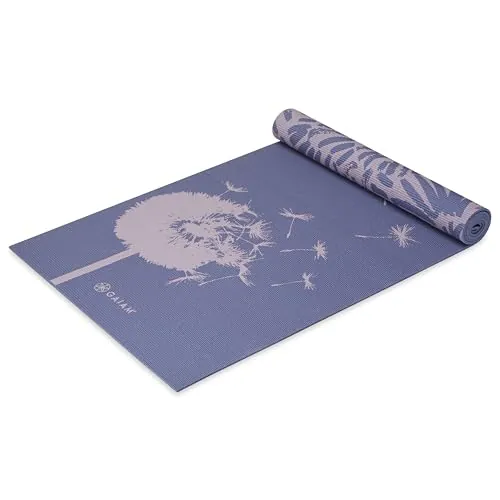
The Gaiam Premium Print Reversible Yoga Mat is the better overall option for adults and older users. Its extra length, 6 mm cushioning, and reversible design make it more useful for regular yoga, Pilates, and floor training. Its limitations are the reported new-mat odor and less consistent feedback on grip and durability. Select based on the user’s size and cushioning needs rather than treating either mat as universally better.

Overall winner
Depends on your needs
The better option depends primarily on the user. The Gaiam Kids Yoga Mat is the more suitable fit for children aged 5–8 because it is lighter and deliberately child-sized. The Premium Print Reversible Yoga Mat is the stronger choice for adults and older users who need its longer 68-inch surface and thicker 6 mm cushioning.
An adult can use the Gaiam Kids Yoga Mat for brief floor activities, but its 60-inch length and 3 mm thickness are designed for children. Taller users or anyone wanting more support for knees and wrists will generally find the larger, thicker Premium Print Reversible Yoga Mat more practical for regular yoga and floor workouts.
The Gaiam Kids Yoga Mat is the clearer choice for most young children. It is specifically marketed for ages 5–8, has a light 0.52 kg weight, and uses kid-focused prints intended to make yoga and playtime more inviting. Its smaller dimensions can also be easier for a child to roll up and carry.
The Gaiam Premium Print Reversible Yoga Mat has more stated cushioning because it is 6 mm thick, compared with 3 mm for the Gaiam Kids Yoga Mat. Buyer feedback for the Premium Print model repeatedly mentions support during poses and added comfort for knees and wrists. More thickness also makes it heavier to carry.
Both listings describe textured, non-slip surfaces. Feedback for the Kids Yoga Mat is broadly positive about grip and staying in place during children’s activities. The Premium Print mat also receives many favorable traction comments, but supplied reviews are more mixed, with some users reporting slipping when sweating heavily.
The Premium Print Reversible Yoga Mat specifically notes that printed mats may have a strong but harmless odor after unwrapping, and the care instructions recommend airing it out for two to three days. One Kids Yoga Mat review also noted a slight smell, although this is not emphasized in its product details.
The Gaiam Kids Yoga Mat is easier to carry due to its much lower listed weight and shorter length. Reviews describe it as easy to roll and store in a cubby or compact home space. The Premium Print mat also rolls up for storage, but its thicker construction and higher weight make it less convenient for younger users.
The Premium Print Reversible Yoga Mat offers stronger value for an adult or older user who will use its added length, reversible design, and 6 mm cushioning. The Kids Yoga Mat offers better-fit value for a child because its dimensions, low weight, and kid-oriented design avoid paying for adult-sized material that may be unnecessary.
Check our rankings and expert guides to find the best fitness products for your goals.