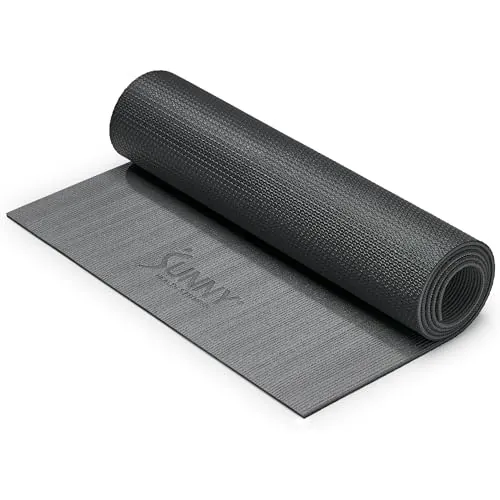
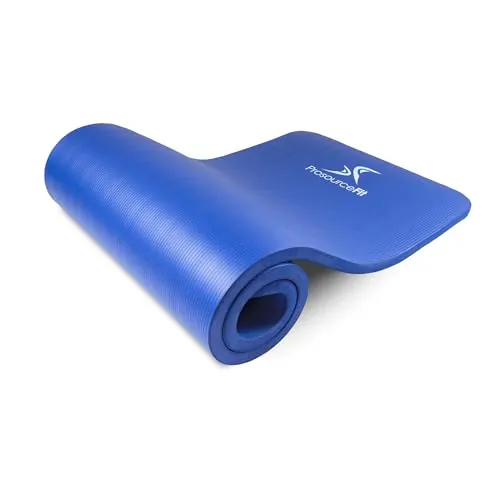
#1 Overall Winner
ProsourceFit Extra Thick Yoga and Pilates Mats 0.5 & 1-in
- Extra-thick NBR foam is designed to cushion knees, elbows, back, and other pressure points during floor work.
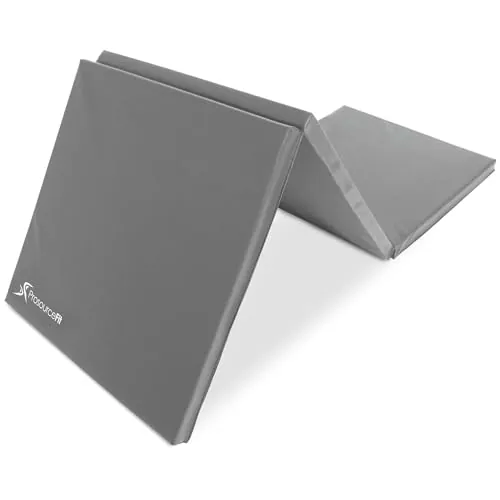
Comparison
The ProsourceFit Extra Thick Yoga and Pilates Mat and ProSource Tri-Fold Folding Exercise Mat both add substantial cushioning for hard-floor training. Product A is a soft, roll-up option geared toward yoga, Pilates, and stretching, while Product B is a firmer, foldable mat with a wider role in core work, gymnastics, martial arts, and home exercise. For most varied floor-workout routines, Product B is the more versatile option. Product A remains the better pick when deep cushioning for kneeling, seated, and reclined exercise is the deciding factor.
#1 Overall Winner
Contender
Choose the Tri-Fold Folding Exercise Mat for a versatile, supportive surface for home workouts, core training, stretching, gymnastics practice, and compact storage. Choose the Extra Thick Yoga and Pilates Mat if your routine is mostly floor-based and maximum softness for knees, elbows, and back matters more than standing stability.
Overall winner
Depends on your needs
| Feature | ProsourceFit Extra Thick Yoga and Pilates Mats 0.5 & 1-in | ProSource Tri-Fold Folding Thick Exercise Mat 6’x2’ with Carrying Handles for MMA, Gymnastics, Stretching, Core Workouts | Winner |
|---|---|---|---|
Primary format |
Roll-up exercise mat |
Tri-fold exercise mat |
Depends |
Listed dimensions |
71 by 24 inches; 1 inch in supplied specifications |
72 by 24 inches; 1.5 inches thick |
ProSource Tri-Fold Folding Thick Exercise Mat 6’x2’ with Carrying Handles for MMA, Gymnastics, Stretching, Core Workouts |
Yoga and Pilates focus |
Directly designed for yoga and Pilates |
Suitable, but broader exercise focus |
ProsourceFit Extra Thick Yoga and Pilates Mats 0.5 & 1-in |
General floor training |
Best for cushioned floor work |
Designed for core work, stretching, gymnastics, and martial arts |
ProSource Tri-Fold Folding Thick Exercise Mat 6’x2’ with Carrying Handles for MMA, Gymnastics, Stretching, Core Workouts |
Comfort and cushioning |
Very soft, high-density NBR foam |
Thick, moderately firm EPE foam |
Depends |
Standing stability |
Mixed feedback on balance stability |
Firmer support, though sliding can still be a concern |
ProSource Tri-Fold Folding Thick Exercise Mat 6’x2’ with Carrying Handles for MMA, Gymnastics, Stretching, Core Workouts |
Material disclosure |
Nitrile butadiene rubber |
Expanded polyethylene foam and polyvinyl chloride |
ProSource Tri-Fold Folding Thick Exercise Mat 6’x2’ with Carrying Handles for MMA, Gymnastics, Stretching, Core Workouts |
Cleaning |
Wipe clean and air dry |
Wipe clean with damp cloth; mild detergent if needed |
ProSource Tri-Fold Folding Thick Exercise Mat 6’x2’ with Carrying Handles for MMA, Gymnastics, Stretching, Core Workouts |
Storage |
Rolls up with included sling |
Folds into three panels with carry handles |
ProSource Tri-Fold Folding Thick Exercise Mat 6’x2’ with Carrying Handles for MMA, Gymnastics, Stretching, Core Workouts |
Portability |
Roll-up design; listed at 4.5 pounds |
Tri-fold handles; listed at 2.15 kilograms |
ProSource Tri-Fold Folding Thick Exercise Mat 6’x2’ with Carrying Handles for MMA, Gymnastics, Stretching, Core Workouts |
Durability feedback |
Mixed reports if treated roughly |
Generally strong, with possible cover wear over time |
ProSource Tri-Fold Folding Thick Exercise Mat 6’x2’ with Carrying Handles for MMA, Gymnastics, Stretching, Core Workouts |
Buyer satisfaction |
Strong praise for cushioning and hard-floor comfort |
Strong praise for versatility, storage, and durability |
ProSource Tri-Fold Folding Thick Exercise Mat 6’x2’ with Carrying Handles for MMA, Gymnastics, Stretching, Core Workouts |
Listed price |
$39.99 |
$44.99 |
Depends |
Warranty |
Limited lifetime warranty listed |
Tie |
Both mats can support a comfortable environment for post-training stretching and gentle mobility work. Product A has a slight advantage where cushioning is the main requirement; its user feedback consistently highlights comfort during floor work on hard surfaces. Product B offers comparable padding with a firmer feel and convenient storage, making it easier to keep available for regular cool-down routines. Neither product should be considered a substitute for medical advice, diagnosis, or treatment.
Product A is most effective as a dedicated comfort layer for floor-based yoga, Pilates, mobility work, and bodyweight exercise. Its soft foam can make kneeling, lying, and seated positions more tolerable on hard floors. Product B covers those roles while extending more naturally to core circuits, strengthening drills, martial arts, and gymnastics-style practice. Its firmer, thicker folding surface better supports users who change positions often or need a more structured training area. Neither product replaces cardio equipment, but both can make warm-ups, cool-downs, and floor sessions more practical at home.
Neither mat provides resistance, but both can support bodyweight strength training by reducing direct contact with hard flooring. The Tri-Fold mat is the better strength-training companion because its listed uses include strengthening workouts and its moderately firm foam is more suitable for planks, core drills, and transitions. The Extra Thick mat works well for kneeling exercises, glute work, and floor mobility, but its very soft 1-inch option may make stable standing or balance-focused bodyweight movements less comfortable.
Both mats are well suited to mobility and flexibility routines. Product A has the advantage for long static stretches, reclined mobility, and kneeling positions because its NBR foam is specifically focused on soft pressure-point cushioning. Product B offers a slightly larger and thicker surface with a firmer feel, which can be useful for moving through a wider range of stretches, core work, and yoga positions. Choose Product A for a softer feel; choose Product B if compact folding storage and a more versatile training base matter more.
These are exercise surfaces rather than recovery treatment devices, but either can make gentle post-workout stretching and floor mobility more comfortable. Product A is especially suited to relaxed, low-to-the-ground work because buyers repeatedly describe substantial cushioning for knees, elbows, hips, and back. Product B also provides meaningful padding and has the added benefit of folding for storage after sessions. Neither mat's feedback should be treated as evidence of treating injuries or medical conditions.
For their intended role as cushioned exercise surfaces, both products perform well in the supplied data. Product A stands out for very soft, pressure-relieving support during floor exercise, especially on hardwood or other hard surfaces. However, that softness can reduce confidence in standing balance positions, and some reviews mention slipperiness when sweaty. Product B performs more consistently across a wider range of activities: its foam is described as cushioned but supportive, and the vinyl-covered folding design suits stretching, core work, gymnastics practice, and general workouts. For versatile performance, Product B has the edge.
Product B provides stronger support for building a consistent home floor-training routine. It folds quickly, has carry handles, fits in compact storage, and is listed for multiple types of exercise, reducing the need for separate padded surfaces. Its firmer cushioning is also better aligned with repeated transitions in core and bodyweight sessions. Product A is highly useful for users whose routine centers on Pilates, floor-based yoga, stretching, or low-impact movement. It offers less training variety for upright work because the soft 1-inch foam may feel unstable during standing balance exercises.
Product B is the more capable mat for bodyweight strength work. The supplied description specifically includes core and strengthening workouts, while reviews describe even cushioning that still allows proper form. Its thicker, moderately firm foam should be more practical for planks, sit-ups, glute bridges, and other floor drills. Product A is better viewed as a cushioning-focused accessory for kneeling or reclined movements. It can improve comfort during floor work, but the springier surface is less ideal when stable foot placement or balance is a priority.
Product B has a narrow advantage for varied mobility sessions because its firm, thick platform supports both static stretching and frequent position changes, then folds away easily. Product A remains an excellent specialist option for users who need a particularly soft surface for long-held stretches, seated work, and positions that load the knees or elbows. The distinction is practical: choose Product A for maximum plushness and Product B for a more stable, multi-purpose base for mobility routines.
Both mats can support a comfortable environment for post-training stretching and gentle mobility work. Product A has a slight advantage where cushioning is the main requirement; its user feedback consistently highlights comfort during floor work on hard surfaces. Product B offers comparable padding with a firmer feel and convenient storage, making it easier to keep available for regular cool-down routines. Neither product should be considered a substitute for medical advice, diagnosis, or treatment.
Both products are intended to create a more cushioned exercise surface, but the best choice depends on movement type. Product A's thick foam can reduce discomfort from hard-floor contact during kneeling and reclined work, yet its softness may be less secure for standing balance poses. Its surface may also become slippery with sweat according to some feedback. Product B's firmer support is more suitable for varied floor drills, though users should still ensure the mat does not slide on their particular flooring. Neither product data supports safety claims beyond their listed construction and user feedback.
Comfort is excellent with both mats, but they deliver it differently. Product A is the softer choice, with high-density NBR foam and repeated buyer praise for cushioning bones, knees, elbows, and back on hard floors. Product B is also heavily praised for cushioning, yet its EPE foam is described as more moderately firm and supportive. Choose Product A for the plushest floor feel; choose Product B if you want substantial padding without as much softness underfoot.
Product B is easier to manage for frequent setup and storage. Its tri-fold construction opens quickly, folds into a compact rectangle, and includes two carrying handles. The vinyl cover also supports simple wipe-down cleaning. Product A is uncomplicated to use: roll it out, wipe it clean, and roll it up with the included sling. However, its thick foam creates a larger roll, and the sling itself receives less enthusiastic feedback. Both require air drying after cleaning.
Product B is the more stable option for most floor workouts because its cushioning is described as moderately firm, helping users maintain form through core work and position changes. Product A's ribbed surface is designed to provide grip, and some users say it stays put, but feedback is mixed. In particular, the 1-inch foam can feel springy or wobbly during standing balance work. For kneeling, seated, and reclined movement, that softness is less of a concern.
Product A has a ribbed, non-slip surface and a material description that emphasizes floor adherence, but real-world feedback is mixed: some users report secure placement while others mention wobble or sweat-related slipperiness. Product B's vinyl surface is not described with a dedicated grip feature, and one buyer suggests separate grips to reduce sliding. Neither mat has enough supplied evidence to claim a decisive traction advantage in every setting.
Product A offers more choice at purchase because the listing describes 1/2-inch and 1-inch thickness options, allowing buyers to prioritize either a lower profile or greater cushioning. Product B has no listed adjustable settings, but its tri-fold construction can be used folded for extra padding according to the product description. For selecting a preferred baseline thickness, Product A is more adjustable; for changing padding through folding, Product B has a practical alternative.
Product B is the better small-space mat. Its tri-fold design is specifically made to fit closets, car trunks, and storage areas without leaving a long rolled cylinder. Product A can be rolled up and carried with its included sling, which is convenient for yoga-style use, but the thick foam is inherently bulkier once rolled. If the mat needs to be put away after every session, Product B has the more efficient format.
Neither product is a meaningful source of workout noise. Both provide a padded layer between the user and the floor, which may reduce direct impact from floor exercises. The supplied information does not provide a detailed comparison of sound reduction, and neither mat is designed as a cardio machine or impact-training surface, so noise should not be a primary deciding factor.
Product B has the stronger build-quality case based on its EPE foam core, vinyl covering, folding panels, handles, and more consistently favorable feedback about regular use. Its cover is designed to resist tears with normal use, although some buyers still report eventual holes or wear. Product A's high-density NBR foam and ribbed finish are well matched to comfort-focused exercise. Reviews support its initial feel and cushioning, but there is more uncertainty about damage if it is handled roughly. Both products are built for straightforward home exercise rather than heavy equipment use.
The Tri-Fold Folding Exercise Mat has the clearer durability advantage. Buyers report long-term use with little visible wear, and the vinyl exterior is intended to resist tearing under normal use. Still, some reviews note that the outer cover can develop holes over time and may need patching. Product A also receives positive comments about lasting comfort, but some buyers believe the foam can be damaged more easily with rough handling. For frequent multi-use household training, Product B presents the more reassuring durability profile.
Both mats are low-maintenance, requiring wipe-down cleaning and air drying rather than machine washing. Product A should be cleaned with a wet cloth or sponge, and its moisture-resistant NBR foam is intended to simplify routine care. Product B's vinyl exterior can be wiped with a damp cloth and mild detergent when necessary, giving it a slight advantage for messier or more frequent use. Avoid storing either mat damp, and inspect Product B's cover for wear if used heavily.
Product B is more portable in practical use despite its folding structure. Two built-in handles and a compact tri-fold profile make it easier to carry from a closet, car trunk, or training space. Product A rolls up and includes a sling, which suits studio-style yoga transport, but its 1-inch foam and listed 4.5-pound weight can make it a comparatively bulky roll. Choose based on whether you prefer folded handles or a traditional mat sling.
Material disclosure is clear for both products. Product A identifies nitrile butadiene rubber as its material and specifies wipe-clean, air-dry care. Product B identifies an expanded polyethylene foam interior and polyvinyl chloride cover, alongside damp-cloth cleaning instructions. Product B provides more detail about the distinct foam and exterior materials, which makes its construction easier to understand. Neither listing provides broader material testing, emissions, or certification information, so those factors cannot be compared from the supplied data.
Value is close because the listed prices differ only modestly and both products include substantial cushioning and a limited lifetime warranty. Product A represents strong value for someone who specifically wants a soft, roll-up yoga and Pilates mat, particularly for floor comfort on hard surfaces. Product B offers stronger all-round value for users who will use its folding design across stretching, core training, gymnastics practice, and general home workouts. Its broader listed use case, storage convenience, and stronger durability feedback justify the slightly higher listed price for many buyers.
Both products come from ProsourceFit and have the same stated limited lifetime warranty, so there is no brand-level divide in this comparison. Product B has a larger supplied review base and more consistently favorable feedback around versatility, storage, and durability. Product A also has strong customer feedback, particularly around cushioning and comfort. Material information and care instructions are provided for both, though neither supplied listing includes independent testing or broader certification details.
Both mats have a high listed star rating and substantial review volume, with comfort as the clearest shared positive. Product A buyers repeatedly praise its thick, soft support for hard-floor exercise, stretching, and sensitive pressure points. Its repeated complaints relate to initial odor, potential sweat slipperiness, softness during standing poses, and the basic carrying strap. Product B has a larger review base and receives repeated praise for durability, firm cushioning, foldability, storage, and easy cleaning. Its recurring concerns are outer-cover wear, occasional odor, and potential sliding on some floors.
Both listings state a limited lifetime warranty, creating a tie on the available warranty information. The supplied data does not specify coverage exclusions, registration requirements, claim timelines, replacement procedures, or support experiences. Buyers who consider warranty coverage important should confirm the current terms directly with the seller or manufacturer before purchasing.
The supplied descriptions support straightforward claims about dimensions, materials, thickness, care, folding or roll-up storage, included carrying features, and listed exercise uses. Buyer feedback broadly supports both mats' cushioning and usefulness on hard surfaces. Product B's versatility claims are reinforced by reviews covering stretching, core work, gymnastics, and general floor exercise. Product A's comfort focus is reinforced by many reports of improved exercise comfort, but those experiences should not be interpreted as medical evidence or as proof of injury recovery benefits. Claims about long-term durability remain more variable, especially for outer materials and rough use.
The ProSource Tri-Fold Folding Thick Exercise Mat is the overall winner for most buyers because it pairs thick cushioning with firmer support, compact folding storage, easy-clean vinyl, and a broader set of listed training uses. It is the more practical pick for regular home workouts, core training, stretching, and gymnastics-oriented floor work. Its main limitation is the potential for exterior-cover wear over time.
The ProsourceFit Extra Thick Yoga and Pilates Mat is the better specialist choice for users who prioritize a soft, traditional roll-up surface for yoga, Pilates, and pressure-sensitive floor exercise. Its key limitation is reduced stability for some standing poses, plus mixed feedback on odor and rough-use durability. Select by training style rather than price alone.
Overall winner
Depends on your needs
The Tri-Fold Folding Exercise Mat is the broader all-round choice for floor workouts, stretching, core work, gymnastics practice, and compact storage. The Extra Thick Yoga and Pilates Mat is the better match when maximum soft cushioning and a traditional roll-up mat are the priority. Standing balance work may feel more stable on the folding mat.
The Extra Thick Yoga and Pilates Mat is more directly focused on yoga and Pilates, with ribbed NBR foam and a roll-up format. Its thick cushioning is particularly suited to kneeling and reclined positions. The Tri-Fold mat can also support yoga and Pilates, but its folding construction is more versatile for broader floor-training use.
The Tri-Fold Folding Exercise Mat is generally the more versatile home-workout option because it is intended for core work, stretching, strengthening workouts, martial arts, and gymnastics. The Extra Thick mat remains a strong home option for low-impact floor routines, especially when comfort on hard flooring is the main concern.
The Tri-Fold Folding Exercise Mat is the more convenient small-space choice. Its three-panel construction folds into a compact shape designed for closets, car trunks, and gym storage, with two carrying handles. The Extra Thick mat rolls up and includes a sling, but its thick foam can still create a bulky roll.
It depends on the thickness selected and the pose. The supplied feedback is very positive about cushioning, but some users find the 1-inch version springy or wobbly for prolonged standing balance positions. It is best suited to floor exercises, kneeling work, seated poses, and stretching where cushioning is more important than a firm base.
Both mats are designed for simple wipe-down care and air drying. The Extra Thick Yoga and Pilates Mat should be wiped with a wet cloth or sponge and is not machine washable. The Tri-Fold mat has a vinyl cover that can be wiped with a damp cloth and mild detergent if needed.
The Tri-Fold Folding Exercise Mat has stronger durability evidence in the supplied data, with recurring buyer praise for its cover and long-term use. However, some reviews still mention holes or outer-cover wear over time. Product A has positive early durability feedback, though buyers also note that rough treatment can damage the foam.
Yes. The supplied listings state that both ProsourceFit mats include a limited lifetime warranty. The available information does not provide the full terms, exclusions, or claims process, so it is sensible to review the current seller or manufacturer warranty details before purchase.
Check our rankings and expert guides to find the best fitness products for your goals.